AOR did not “save” Kayla Giles, and the case is being heavily used as marketing
I keep seeing people say Attorneys on Retainer stepped in after USCCA abandoned Kayla Giles, took over her case, and got her murder conviction overturned.
That is not what the court record shows.
Kayla Giles was convicted of second-degree murder and obstruction of justice after shooting her estranged husband during a custody exchange. In June 2025, the Louisiana Supreme Court vacated the murder conviction because the jury received a legally improper aggressor instruction that conflicted with Louisiana’s vehicle-entry and stand-your-ground provisions. The court did not acquit her, find her factually innocent, or rule that the shooting was conclusively justified. It reversed because the trial was legally defective and remanded the case for further proceedings.
More importantly, the lawyer who handled that successful appeal was Louisiana appellate attorney
Jane Catherine Hogan, not Marc Victor, Andrew Marcantel, or Attorneys on Retainer. AOR publicly discussed Giles’s case, interviewed her, spoke with some of her lawyers, criticized USCCA, and produced a large amount of content about the case. But discussing and promoting an appeal is not the same thing as litigating and winning it.
AOR’s own pre-decision material makes this distinction fairly clear when read carefully. Their December 2024 update referred to arguments being raised by Giles’s “appellate counsel” while Victor and Marcantel provided commentary and a status update. Their 2024 interview said Giles had already appealed and was awaiting action by the Louisiana Supreme Court. In other words, she already had separate appellate counsel while AOR was making videos about her.
After the reversal, however, AOR placed its own attorneys front and center in videos and articles about the “massive” victory and used the result to promote AOR over insurance-backed programs. They had also previously published content titled
“Kayla Giles’ Shoot was JUSTIFIED”, followed immediately by promotion of the AOR program.
That presentation has apparently convinced a lot of people that AOR stepped in as her legal team and obtained the reversal. The actual sequence was closer to this:
- Giles was tried and convicted by other lawyers.
- Jane Hogan handled the appeal.
- AOR publicly commented on the case and interviewed Giles while Hogan’s appeal was pending.
- Hogan obtained the murder reversal.
- AOR then used the result extensively in its own marketing.
There is another major detail that tends to disappear from the promotional version: Giles is still in prison.
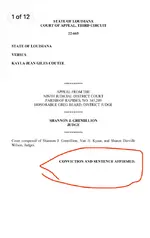
The Supreme Court left the separate obstruction-of-justice conviction unresolved and sent it back to the Third Circuit for proper review. The Third Circuit later upheld the obstruction conviction and the 30-year sentence. The basis was her handling and concealment of a laptop containing deleted self-defense research and other evidence relevant to the investigation.
So she was not exonerated and released. Her murder conviction was vacated because of a jury-instruction error, while an independent felony conviction carrying a 30-year sentence remained intact.
The evidence was also far more damaging than AOR’s “justified shooting” presentation suggests. The court opinions describe evidence that she:
- conducted multiple searches about Louisiana self-defense law, concealed-carry insurance, being arrested after self-defense, and self-defense inside a vehicle;
- attempted to erase those searches;
- purchased a firearm shortly afterward despite being subject to a protective order;
- gave an allegedly false answer concerning that order during the purchase;
- transferred her laptop to her sister before the shooting;
- later instructed that it be transferred to another person;
- deleted other electronic material;
- may have had the firearm already in hand as her husband approached.
The dissenting justices believed this evidence supported the prosecution’s theory that she planned the shooting and manufactured a self-defense scenario. The majority disagreed about the jury instruction, but it did not decide that the prosecution’s evidence was insufficient or that Giles was innocent.
AOR attached its brand to the case, amplified it, and then turned the reversal into a promotional case study for its own product. Calling that “AOR stepped in and saved her” is inaccurate. A more honest description is that AOR acted as a public advocate and commentator, then heavily marketed a result achieved by someone else, while Giles remained incarcerated on a 30-year obstruction conviction.
Source:
https://cases.justia.com/louisiana/third-circuit-court-of-appeal/2025-ka-0022-0665.pdf?ts=1763570209