18+ Content Warning

By clicking Enter, you confirm you are 18 years of age or older and agree to comply with all applicable local, state, and federal laws.

Notice: Any content or member activity - including anything you may buy, sell, transfer, or discuss - must comply with current and upcoming laws.

Members are encouraged to stay informed: California Firearm Laws: 2026 Outlook & 2025 Recap . Responsibility for compliance rests solely with the individual member.

caguns.net

Welcome to CAguns.net!
Join our growing community where you can ask questions, share knowledge, or browse our classifieds section.

Sign up for a free account today and unlock full access! Once registered, you can search, post, and take advantage of exclusive features unavailable to guests.

A note on why more of the site now requires an account: automated scrapers and AI systems have been crawling our forums and classifieds at a scale. Requiring sign-in for those sections is the most effective tool we have. It takes a minute to register, it's free, and it keeps what happens here between actual members.

New to California gun ownership or trying to keep up with the changing laws? Check out our sister site CA2A.com — free courses, plain-English legal updates, and step-by-step guides built for California owners.

Advanced features are available only to registered members. Register today!

How many rounds do you plunk test?

weaverftw

⚜️ Member
CAguns Supporter
Messages
927
So I’m curious how many of your reloads you guys plunk test, and if that depends on how familiar you are with that load, use sorted brass vs mixed, etc.

I loaded a batch of 147gr Xtreme FMJs to 1.140” (my chamber measured over 1.169” so I started at 1.150” but tried everything down to 1.100” and found the 1.140” were more accurate) over 3.2gr Titegroup, and when I nail the OAL they are perfect. But I ran into an issue where one in every 20rds or so was too long and will not plunk and spin - I actually had a couple fail to return to battery.

I traced the issue in my methodology - turns out I was missing an oring in the Lee precision bullet seater, so the internal bit that slides around in the die was jamming up and trying to crimp the bullet around the ogive before it was fully seated to depth. I noticed the additional pressure this caused on the press handle as I loaded, and as I checked the rounds that this happened on they were much longer OAL than the others, so I jiggled the bullet seater loose and seated them again to around 1.140”; but it turns out the bullet was deformed enough from the false crimp in the ogive that it meant one of these deformed bullets at 1.140” would hit the rifling even though a un-molested bullet chambered fine at that OAL.

I’ve since corrected the issue with the bullet seater, and an getting more consistent OALs now, but this brought up the question - how many rounds do you guys actually measure the OAL on, or plunk test? Every one? Every 5-10? Does that change if they’re for the range vs a match, or based on how much margin of error you have for that chamber?

 
When re-adjusting the seating/crimp die or using new/different projectiles I'll test 5-10 then call it good.
 
I use the Hundo case gauge and you can hold it up and look at them all and see if any look weird. But I also just load as short as I can get away with, every bullet is different and right now I'm using some weird ass 147 flat point coats bullets. They are like 1.08 oal but it's tricky because they are flat point so the length isn't comparable easily to a round point. I just try to get as close to the ogive as possible. The real test is shooting them fast, like if I can do a hundred rounds of bill drills they are probably good. I've never had feeding issues personally from going too short but definitely have from going too long. If you need them to be 100 you kinda gotta gauge them all though. Weird stuff happens and gets through
 
I use the Hundo case gauge and you can hold it up and look at them all and see if any look weird. But I also just load as short as I can get away with, every bullet is different and right now I'm using some weird ass 147 flat point coats bullets. They are like 1.08 oal but it's tricky because they are flat point so the length isn't comparable easily to a round point. I just try to get as close to the ogive as possible. The real test is shooting them fast, like if I can do a hundred rounds of bill drills they are probably good. I've never had feeding issues personally from going too short but definitely have from going too long. If you need them to be 100 you kinda gotta gauge them all though. Weird stuff happens and gets through
Hmmm that is a good point, maybe even if 1.140” is more accurate I’m better off loading to 1.110” or something just for the margin of error
 
Hmmm that is a good point, maybe even if 1.140” is more accurate I’m better off loading to 1.110” or something just for the margin of error
The accuracy thing could be a lot of different things, was the barrel hot, did the neck tension/crimp change due to the bullet being set further in etc. I would just load for reliability, the Xtreme bullets aren't super consistent in the first place, that's why they are cheap. USPSA targets are huge and the scoring is really driven by speed so it's really not going to matter for that at this stage.
 
With a small collection of 32 pistols I really had to be diligent in testing for clearance. Chamber dimensions for WW2 era and later pistols were all over the place. What would kerplunk easily in one gun would jam up solid in another requiring a small wooden dowel to punch it out.
 
Well I haven’t had the chance to plunk test all my reloads to weed out any that might be too long, so I just bought some factory Black Dot 147gr plated rounds to shoot tomorrow at my match. I plunk tested ~10 of them to make sure they are gtg with my CZ, but still a little apprehensive about using them since I haven’t shot them before. Might use regular factory 115 fmj this time and save these and my reloads until I can test at the range
 
Plunk test to find what OAL works with your gun. After that, case gauge ALL your match ammo. Check your primers during the case gauge process. It’s a quick but necessary way to make sure that one bad round doesn’t ruin your match.


IMG_1267.webp
 
Don't own anything fancy or expensive, but a number of different manufacturers, Glock, Beretta, Ruger, Smith and Wesson, CZ, Springfield, different models in several brands, found that the SA XD 9 requires the shortest OAL for the 124 gr rn FMJ I commonly reload with (Rocky Mountain Reloading), of all the different 9mm handguns that I have. Also true with the Blue Bullet 124 grain rn. So I plunk and spin all my 9s through the XD 9 barrel. I don't have time to make different loads for multiple handguns (I don't shoot competitively). If I pickup something differnt, will always plunk test with it to make sure it's good to go.
 
I pick up random brass off the range so it's all suspect until proven good.
I chamber gauge test all my reloads that are intended for semi-autos.
On 223, I do get some that are slightly long due to being harder and the press frame stretching more during sizing.
Those I measure the shoulder length on and bump the shoulders back to get them into spec.
On 9mm and 380, I get some that won't drop fully into the gauge and it's usually damage to the case rim that I fix by turning the round end-for end and using the case gauge to iron out the damage.
Then I drop it into the gauge again.
Any that still fail the gauge get culled and used for practice only.
 
Last edited:
Similar process for me as well. I use range brass, load on a Dillon 550 and check every round with a chamber guage.
 
I run all of mine through a hundo gauge.
I’m not worried about my machine tolerances but since I run pick up brass from a range where guys shoot 9 major it sorts out the split cases before it goes in the ammo box.
 
I chamber check every round using a hundo. Whats the point of checking a few every once in a while? You're not verifying die settings, the objective is to find bad rounds.
 
I chamber check every round using a hundo. Whats the point of checking a few every once in a while? You're not verifying die settings, the objective is to find bad rounds.
Exactly
 
I chamber check every round using a hundo. Whats the point of checking a few every once in a while? You're not verifying die settings, the objective is to find bad rounds.
Hundo?

I guess I need to improve my QC process… getting a gauge now to test every round I’m planning on using for competition
 
Assorted range brass, all loaded on a 550 or a 650 and every rd gets checked in the hundo. Nothing goes into the ammo cans without getting checked.
 
Hundo?

I guess I need to improve my QC process… getting a gauge now to test every round I’m planning on using for competition
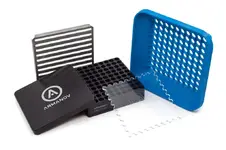
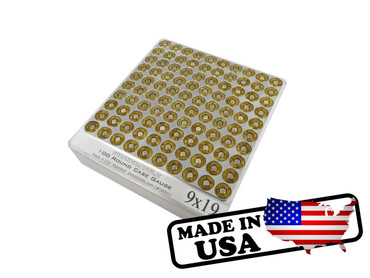
Its a 100 cavity case gauge made by Shockbottle. They're always sold out everywhere. When I got all mine probably 12 years ago they were always sold out then as well. They work really well and are holding up extremely well. Get or print a funnel for it too.

 
Its a 100 cavity case gauge made by Shockbottle. They're always sold out everywhere. When I got all mine probably 12 years ago they were always sold out then as well. They work really well and are holding up extremely well. Get or print a funnel for it too.

yeah they are almost impossible to find I got mine a long time ago too, maybe try this thing? https://www.ebay.com/itm/387754542866
 
Back
Top Bottom